Protecting Future of Space System Architectures: Acknowledging, Understanding, and Addressing cyber attack surface
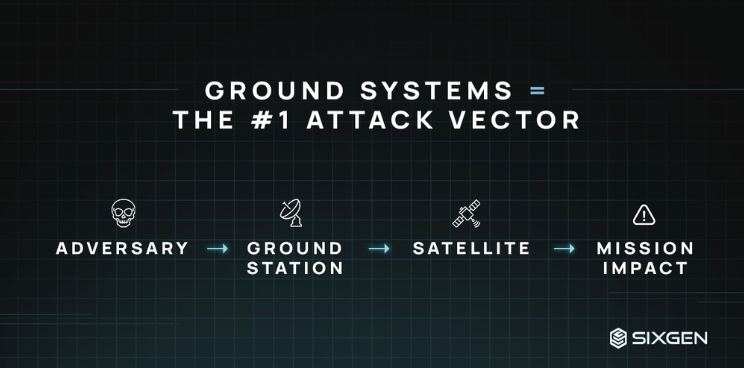
As the size, impact and complexity of space system architectures grow, so too does their susceptibility to adversarial threat actors. Thanks to increased software definition, technology normalization, and the burgeoning democratization of space, the cyber attack surface has evolved from something foreign to hackers into something much more familiar.
Architectural components.
From a cybersecurity and cyber attack surface perspective, space system architecture of today and into tomorrow could be split into intra-system categories of what is on the ground and what is in space. In the spirit of addressing the risk of tomorrow, an emergent aspect must also be considered in the inter-system attack surface, specifically in space. The inter-segment attack surface will increasingly represent cyber risk in space as systems become built to connect to each other, and interdependence evolves over the next 5-10 years to rival the cell providers and ISPs of today
Communications links, while part of space system architecture represent a much more mature portion of these systems that must be protected by encryption, COMSEC, and TRANSEC.
The Ground Segment
Most often targeted and easily targetable segment
Mature traditional cybersecurity technologies exist and should be leveraged
Compromise of some parts would prove immediately fatal to the space vehicle
The Space Segment
Difficult to target and largely inaccessible segment
Cybersecurity solutions are generally bespoke, immature, and unproven
Compromise of any part would likely prove immediately fatal to the space vehicle
Inter-System Segment
Targetable in ways similar to the threats ISPs and cell providers face today
Cybersecurity capabilities are barely in the planning factor
Compromise of one segment could affect entire orbital planes
What Can Space System Owner/Operators Do Now?
Risk is holistic within a space system, and operators must acknowledge, understand, and address all three facets of their cyber attack surface
Adequately secure the ground through existing and mature solutions
Appropriately select and adopt novel technologies to bring defense in depth into orbit
Plan for the architecture tomorrow that will interconnect, impact, and depend upon inter-system segments
Adversarially Assess each segment of their architecture during both development and operation to outpace the threat
Conclusion
The ground segment is the problem that should already be solved. The space segment is the problem to be solved today. The inter-system segment is the problem to be understood before tomorrow is too late. Reactive and defensive solutions should be the minimum, ongoing adversarial assessment should be the rule.